- Join Us
- Login
- EEA ToolKit
- Employment Essentials
- Frequently asked
- Contracts and wages
- Time off work & absence
- Staff management & training
- Workplace disputes
- Dismissals and resignations
- Pregnancy and children
- Avoiding discrimination
- Redundancy and Retirement
- Other responsibilities
- Legal Helpline
- Recruitment
- Good Recruitment
- New starters
- Find a groom
- Good Employment
- Resources
- Downloads Library
- EEA Pension & Payroll
- Safe workplace
- Employers Minds
- Transporting horses
- Riding Establishment Licences
- Member discounts
- Business Hub
- Equestrian businesses
- The business plan
- Business compliance
- My clients
- Livery Contract Creator
- Financial matters
- Business challenges
- Marketing
- The EEA
- Employers Life
- Contact
Join Us
Employment Essentials
Recruitment
Good Employment
Resources
Business Hub
Employers Life
The EEA
Contact
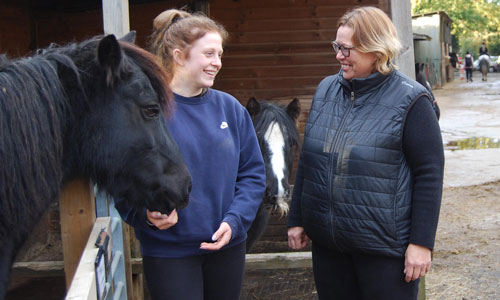
What our members say

“As a livery yard owner, the support from the EEA has been invaluable in the employment of our staff and the efficient running of the business.”
Day Dressage
EEA Member

“We decided we were going to do things differently, I just wasn't always sure how to do it! The EEA has all the solutions to employing staff legally.”
D & L Performance Horses
EEA Member
- Frequently asked
- Contracts and wages
- Time off work & absence
- Staff management & training
- Workplace disputes
- Dismissals and resignations
- Pregnancy and children
- Avoiding discrimination
- Redundancy and Retirement
- Other responsibilities
- Legal Helpline
Tools







- Good Recruitment
- New starters
- Find a groom
Tools
Tools
- Downloads Library
- EEA Pension & Payroll
- Safe workplace
- Employers Minds
- Transporting horses
- Riding Establishment Licences
- Member discounts
Tools
Some functionality of the website is not currently available due to technical difficulties. We're working on fixing the issue.

Employer's Life
From January 2027, one of the biggest employment law changes affecting equestrian employers is expected to come into force. But these future changes will affect staff you employ NOW. In this essential two-part series, the legal experts at HCR Law explain the changes, why you need to act now, and how updating and refining your recruitment process can help reduce your financial risk. From January 2027 employees will be able to bring an ordinary unfair dismissal claim after six months' continuous service, rather than the current two-year qualifying period. At the same time, the Government is abolishing the current cap on unfair dismissal compensation (currently the lower of 52 weeks’ gross pay or £123, 543). This will further increase the financial risk of getting recruitment and dismissal decisions wrong. Importantly, there are no transitional provisions: any employee who has already reached, or will reach, six months’ service by 1 January 2027 will benefit from the change immediately. This means it is essential to review recruitment and probation practices now, rather than waiting until closer to the change. For employers, this means there will be significantly less time to assess whether a new recruit is suitable for the role before they gain unfair dismissal protection. Making the right recruitment decisions and managing probation effectively will therefore become more important than ever. Recruiting the wrong person can be costly. Poor performance, attendance issues or an unsuitable attitude can impact horse welfare, customer service, team morale and productivity. With less time available to identify and address problems, employers should ensure their recruitment process gives them the best possible chance of selecting the right candidate. A structured interview is one of the most effective ways to do this. Asking every candidate relevant, consistent questions helps employers make objective recruitment decisions and identify the applicant who is the best fit for the role. The EEA's Interview Creator makes this easy. It allows employers to build bespoke interviews using professionally written questions tailored to the vacancy, helping ensure interviews are consistent, thorough and legally compliant. Many equestrian employers currently use six-month probationary periods. However, once the new rules take effect, this will not provide enough time to properly assess a new employee before they qualify for ordinary unfair dismissal protection. Employers should consider whether a shorter probation period would be more appropriate. Many employers are now moving towards probation periods of around three to four months, with a discretionary extension of up to one month. This leaves sufficient margin before the six-month threshold is reached. This provides sufficient time to monitor performance, hold review meetings and, where necessary, make decisions before the employee reaches six months' service. Leaving a probation review until the end of a six-month period could mean an employee can bring an ordinary unfair dismissal claim, if dismissed. It's important to remember that there is no legal definition of a probationary period. A probationary period is simply a contractual tool that allows employers to assess whether someone is suitable for the role while providing appropriate support, training and feedback. It should never be viewed as a period where an employee has no legal rights. Employees are entitled to statutory employment rights from their first day of employment, including paid annual leave, National Minimum Wage, Statutory Sick Pay (where eligible) and protection from unlawful discrimination. Do you need legal support? The employment process doesn’t always run smoothly. The EEA provides advice and support to our members on everyday HR and employment matters but for more serious issues the team at HCR Law is here to help.
Recruitment and Probation Changes Pt 1
19th August 2026

Part 1: Review your recruitment and probation practices
Why employers need to act now

Recruit right from the start
Review your probation periods
No legal definition
BLOG ARCHIVE
- 2026 (17 ENTRIES)
- 2025 (16 ENTRIES)
- 2024 (10 ENTRIES)
- 2023 (10 ENTRIES)
- 2022 (6 ENTRIES)
- 2021 (4 ENTRIES)
- 2020 (7 ENTRIES)
- 2019 (14 ENTRIES)
- 2018 (9 ENTRIES)
OUR PARTNERS



-Small.jpg)

The EEA is the membership association for all
equestrian employers in the UK and NI.
MEMBERS OF:


Your item has been added to the basket
You need to create an account, or login before you can add this item to your basket.